
The sleeping giant of climbing access
When climbing isn't formally recognised and we lack strong relationships with DOC, councils and mana whenua, even long-established crags on public land can face an uncertain future.
When climbing isn't formally recognised and we lack strong relationships with DOC, councils and mana whenua, even long-established crags on public land can face an uncertain future.
Saturday morning, your alarm goes off, the car is packed and you drive to your local crag. You walk down the ever-so-slightly overgrown track and flake your rope beneath a route that's probably been there longer than you've been climbing.
The bolts were placed and, over time, replaced. The route was cleaned, the track cleared and the crag gradually developed into the place you climb today. There might be a guidebook telling you what to climb, or hundreds of ticks online from the people who climbed it before you. Most of us don't give a second thought to how the crag came to be, let alone stop to ask whether any of it is actually allowed to be there.
At many climbing areas on public land in Aotearoa, the answer isn't nearly as comfortable as you might think.
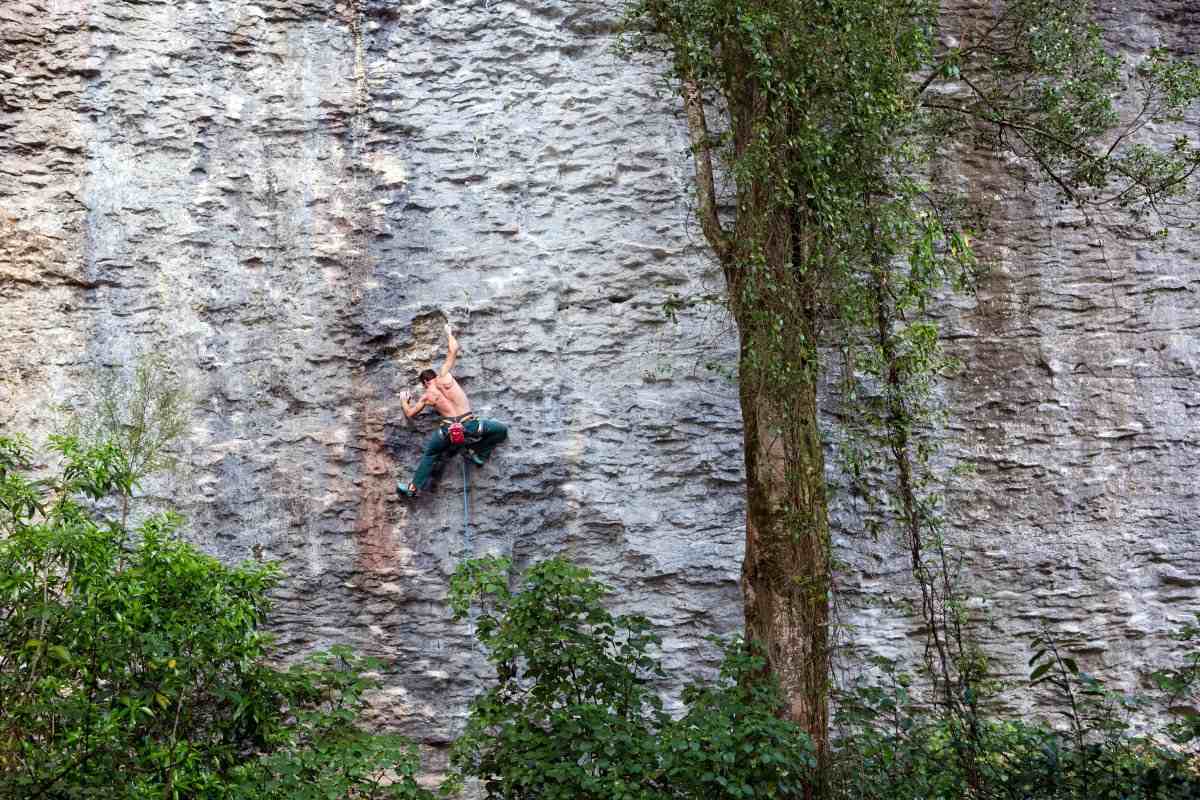
Tom Hoyle on Overdrive at Paines Ford. Photo: John Palmer.
For decades, climbing has quietly developed on land managed by DOC and local councils, with generations of climbers pouring thousands of volunteer hours into establishing and caring for the places we climb. Despite that investment, many established crags have never been formally recognised. Installing fixed infrastructure, clearing vegetation and carrying out track work on public land can require approval from the agency responsible for that land, yet there is no simple national framework for how established crags should be maintained, how ageing infrastructure can be replaced or how appropriate new routes can be developed.
For a long time, staying under the radar worked. But climbing isn't under the radar anymore. We have crags that have been climbed for generations, clubs with hundreds of members, guidebooks, track networks and thousands of fixed bolts. Climbing has grown from a fringe sport into an established part of outdoor recreation in Aotearoa, but in many of the systems governing the public land where we climb, it barely exists.
And we're starting to see what happens when that gap catches up with us.
At Mangorewa Gorge near Rotorua, questions around climbing weren't simply about whether people should be allowed to climb. They involved permanent infrastructure, access tracks, conservation values, the cultural significance of the area and the absence of a formal agreement around climbing. Working through those questions has meant years of conversations between Tapuika iwi, DOC, Rotorua Climbing Club and ACAT. The crag is open again, but we still need to reach an enduring Community Agreement to ensure its future.
This isn't an isolated problem. Across Aotearoa, many established crags on public land have grown without clear, enduring agreements that recognise climbing or provide a practical framework for looking after them. What we're beginning to understand is that these aren't individual access problems. They're symptoms of something much bigger: climbing has outgrown the grey area it has occupied for decades.
The frustrating part is that climbers increasingly want to do the right thing. We want to replace ageing bolts safely, maintain tracks responsibly, protect conservation and cultural values and build better relationships with the people responsible for the land. But there isn't currently a practical national pathway for doing that.
Some clubs have Community Agreements with their local DOC offices, but these weren't designed as a national approach to climbing and don't necessarily address everything from routine maintenance to new route development. Simply telling climbers to "get permission" doesn't solve the problem either. Permission from whom? For what? Using what criteria? What information does a land manager need to make that decision? And what does responsible crag development actually look like?
Without workable answers, the easiest option is the one climbing has relied on for decades: keep doing it quietly and hope nobody asks. However, it's a ticking time bomb that we need to address.
Bringing climbing out of the grey area
ACAT is now bringing work we had previously treated as separate projects into one national strategy for climbing on public land. The goal is to work with climbers, clubs, DOC, councils and mana whenua to build a practical approach for looking after established crags and enabling appropriate new route development.
That will include helping decision-makers better understand how outdoor climbing actually works, but the bigger challenge is building a balanced approval framework that works in practice. Not a free-for-all, and not a permission system so onerous that neither climbers nor land managers can realistically use it, but an approach that protects conservation and cultural values, gives land managers confidence in the climbing community and allows climbers to take responsibility for the places we love.
We could sit down and write that framework ourselves, but that's the easy part. For it to work, the people affected need to be part of building it. That means getting DOC, local climbing clubs and route developers, mana whenua and other land managers around the table, visiting crags together and finding solutions that make sense both on paper and on the ground.
If the last five years have taught us anything, it's that the real infrastructure behind lasting access isn't bolts or tracks. It's relationships.
We've done this before
Five years ago, ACAT was staring at another access problem much bigger than any individual crag. Uncertainty in health and safety law was contributing to landowners restricting access to crags, and we couldn't solve that by negotiating with one landowner at a time. We had to change the system behind the problem.
This year, after years of advocacy, we did it – we pushed through a new national health and safety law just for recreational access. That experience showed us that systemic access problems can be solved. But they take time, expertise, relationships and a climbing community prepared to back the work long before there's a win to celebrate.
Now, public land is our next big challenge.
We want climbing to be understood and recognised as an established part of outdoor recreation in Aotearoa, with practical systems that allow us to care for existing crags and develop appropriate new routes while respecting the conservation and cultural values of the places where we climb. It won't happen in a week, and it probably won't happen in a year. Neither did changing the Health and Safety at Work Act. But we have a plan, we know where to start, and we've proved we can take on problems at this scale.
Now we need the climbing community behind us. This Access Action Week, we're looking for 100 new Access Advocates to make a monthly or annual donation and help us take on climbing's next big access challenge.
Supporting access isn't only about donating. Get involved with your local climbing club, lend a hand at a working bee, help care for your local crag or simply take the time to understand the access agreements that make climbing there possible. Lasting access takes all of us playing our part.
For decades, climbing has survived in the grey area. It's time to change that and legitimise climbing on public land.