
Handshake to heartbreak
How climbing’s growth is changing the relationships that keep our crags open.
How climbing’s growth is changing the relationships that keep our crags open.
It's a story New Zealand climbers know well, because it keeps happening. A local finds a cliff of limestone or ignimbrite on a farm, in a gorge, or on the edge of a scenic reserve. They knock on a door, meet the landowner, and get a nod: sure, you and your mates can climb here. Routes get bolted. A guidebook page goes up. Word spreads. A quiet handshake agreement turns into a destination crag, pulling in climbers who've never met the landowner and have no idea what was actually promised, or to whom.
The relationship starts to strain. Five climbers become 50. Fifty become 500. The person who originally knocked on the door moves away. New climbers don't know the landowner, the landowner doesn't know them, and nobody is quite sure what was agreed in the first place. Add a blocked gate, an overflowing car park, a maintenance issue or a concern about liability, and suddenly a relationship built on goodwill is carrying far more than it was ever designed to.
Eventually, the gate closes. The rock hasn't changed. But almost everything around it has.
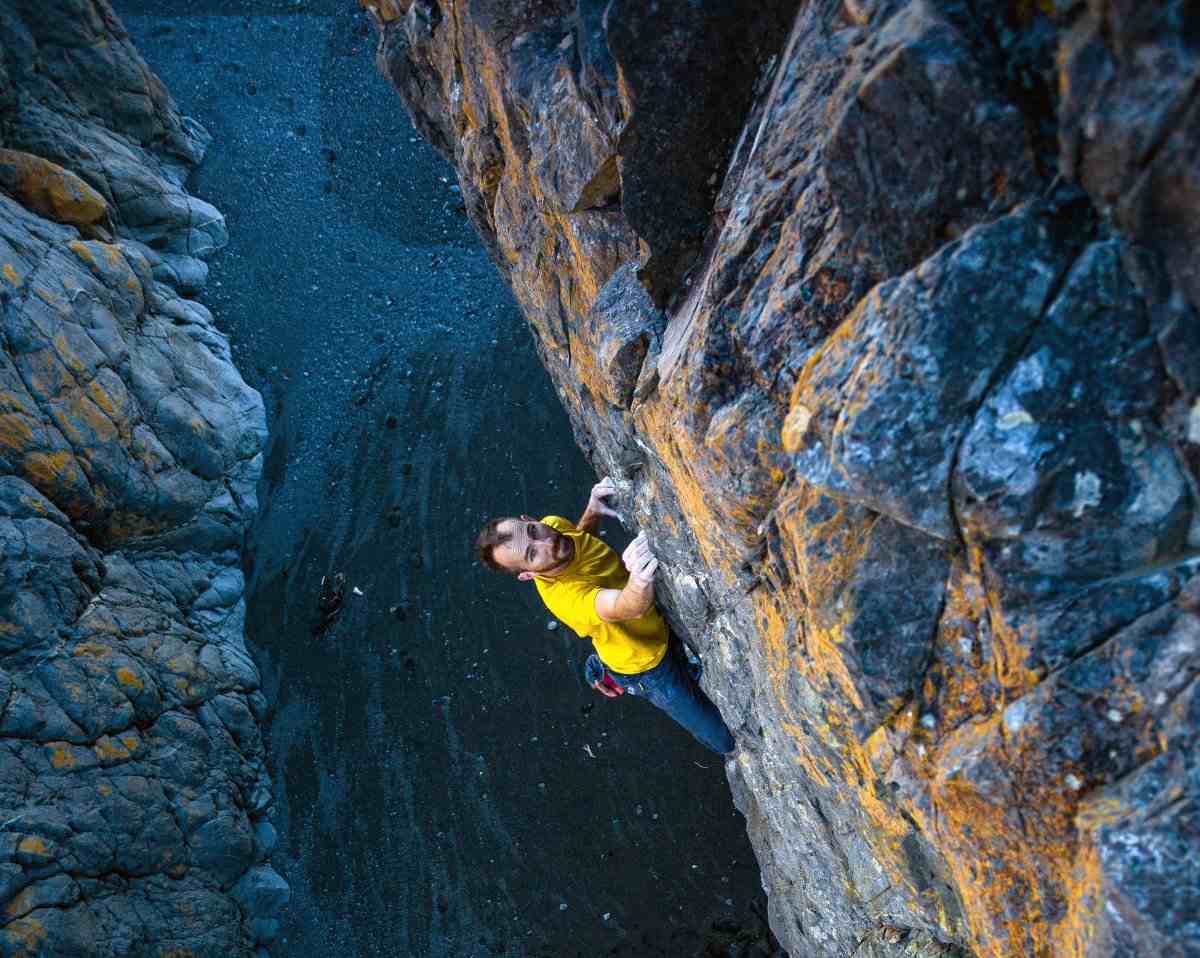
Baring Head. Photo: John Palmer.
Climbing changed
For a long time, informal access worked remarkably well because climbing was a much smaller world. The people developing a crag were often the same people climbing there every weekend, and chances were they knew the landowner who had allowed access in the first place.
Over the past couple of decades, that world has changed enormously. Indoor gyms have brought climbing into our towns and cities, climbing has made it to the Olympics, and people who might never have considered themselves climbers are discovering the sport every year. At the same time, what once required knowing the right person or owning the right guidebook can now be found online in seconds, complete with directions, route descriptions and comments from the people who climbed there last weekend.
That's an incredible shift, and one we should be excited about. But it also means the connection between the person climbing a route and the relationship that makes climbing there possible has become much weaker. You can discover a crag online, follow Google Maps to the car park and climb there all day without ever knowing whose land you're standing on, what was agreed, who replaces the bolts or who gets the phone call when something goes wrong.
Walk into a modern climbing gym and the infrastructure supporting your climbing is obvious. You pay at the desk, the bolts and anchors are maintained, the rules are clear and there are staff responsible for keeping the place running. As climbing has grown indoors, businesses, facilities and paid roles have grown around it.
Outside, much of that infrastructure is almost invisible. The bolts might have been paid for and installed by a climber you've never met. The track maintained by a local club. The parking could be part of someone's working farm. A toilet, stile or sign might exist because volunteers raised the money and spent a weekend building it. And the only reason you're allowed to be there at all might trace back to a conversation someone had with a landowner years before you started climbing.
So while a crag might have hundreds of routes, thousands of online ticks and a steady stream of visitors every weekend, the access itself can still rely on an informal agreement made for a much smaller climbing community.
That model got climbing a remarkably long way, and in many places it still works. But as the sport has grown, we're asking those old relationships to carry far more than they were ever created for, while the number of people and funding supporting outdoor access hasn't necessarily grown with it.
When growth catches up with access
Pakeho shows what that disconnect can eventually look like.
By 2022, the limestone crag near Piopio had grown into a popular North Island climbing area, with around 1,000 climbers visiting each year. But the landowners increasingly felt they were carrying the burden of hosting a major climbing area without much support from the community using it. Despite the number of visitors, only a handful had made donations, and frustrations around maintenance, infrastructure, liability concerns and the responsibilities that came with having so many people on the property had built over time.
There wasn't one terrible incident that brought everything crashing down. The arrangement simply wasn't working anymore, and in 2022 Pakeho closed.
What happened next matters, because reopening Pakeho wasn't about trying to recreate the informal arrangement that had existed before. It was about building something that reflected what the crag had become.
Over the following two years, ACAT and key volunteers worked with the landowners and local climbing community to rebuild that relationship. A Memorandum of Understanding put expectations around access and responsibilities in writing, a registration system and visitor limits were introduced, and climbers were given a way to contribute financially to the place they were using. At the same time, the climbing community put more than 100 volunteer days into the crag, with more than $15,000 spent on rebolting alongside improvements to tracks, fencing, signage and other infrastructure.
When Pakeho reopened in November 2024, it wasn't simply a return to the access that had existed before. There was now a much stronger structure sitting underneath it, one designed for the number of people actually using the crag and with a clearer relationship between the climbing community and the people welcoming them onto their land.
The MOU was important, but ultimately the piece of paper wasn't what reopened Pakeho. The relationship did.
The work behind an open crag
Pakeho is one example of something happening largely out of sight across Aotearoa. When access is working well, you don't see most of the work behind it. You don't see the conversations with a landowner, the volunteer replacing a worn anchor, the club member clearing a track after work or the hours spent resolving a problem before it becomes a closure. You arrive, pull on your shoes and climb.
For decades, outdoor climbing has been sustained by a relatively small group of people putting in an extraordinary amount of time, often with very little funding. That model got us a remarkably long way, but the climbing community they're supporting is no longer small. We can't expect landowners, local clubs and the same handful of volunteers to absorb the growing cost and responsibility of outdoor climbing indefinitely.
If we want outdoor climbing to keep growing, the support behind access needs to grow with it. That doesn't mean turning every crag into a climbing gym or wrapping every relationship in paperwork. It means stronger relationships with landowners and mana whenua, clear agreements where they're needed, better-funded crag care, stronger local clubs and more climbers understanding what it takes to keep the places we climb open.
For ACAT, it also means doing more of that work before there's a locked gate in front of us. But we can't do it alone. Registering when you're asked to, donating when there's a system in place, joining your local club or giving up a Saturday for a working bee might feel small, but collectively they're how we build an outdoor climbing community capable of supporting the sport it has become.
This Access Action Week, we're looking for 100 new donors to make a monthly or annual donation and help us invest in the relationships, people and systems behind climbing access. Not just reopening crags once something has gone wrong, but giving them a better chance of staying open in the first place.
Climbing in Aotearoa has changed enormously, and that's worth celebrating. Now we need to make sure the support behind outdoor climbing grows with it.